Minimally Invasive Surgery Options for Neck & Back Problems
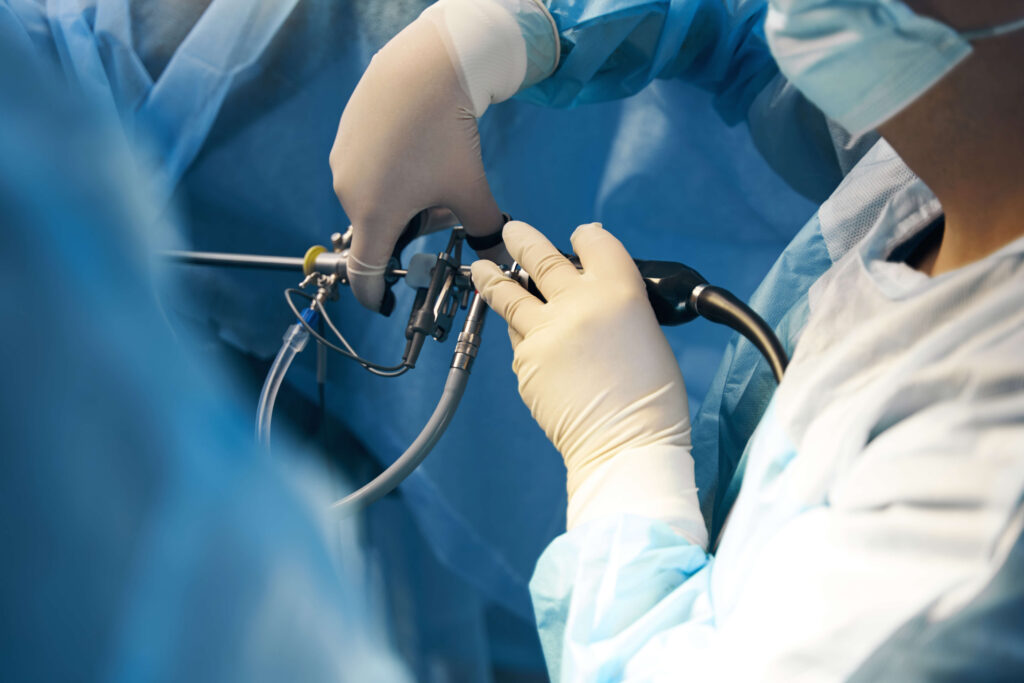
Minimally invasive spine surgery uses smaller incisions, tubes or endoscopes instead of wide exposure, and works between muscles rather than cutting through them. For the right problem, that generally means less blood loss, less post-operative pain, and a faster early recovery. It does not mean the operation is minor, without risk, or right for every condition.
In this post, we’ll be discussing the main minimally invasive options, which problems each one addresses, the honest trade-offs, and how to tell whether said approach suits your situation. Read on to learn more!
What Makes a Procedure Minimally Invasive
The term describes the approach, not the goal. The surgical objective, whether taking pressure off a nerve or stabilizing a segment, is the same as in open surgery. What changes is how the surgeon gets there:
Smaller incisions, often measured in fractions of an inch rather than inches.
Muscle sparing. Tubular retractors spread muscle fibers apart instead of detaching them, which is a major driver of how sore patients are afterward.
Imaging guidance. Live X-ray or navigation substitutes for the direct visual exposure that a larger incision would provide.
Outpatient potential. Many of these procedures allow patients to go home the same day.
The Main Options
Select an option to see what it treats, how it differs from the open version, and what recovery generally involves.
Choose an option. Which one fits depends on your diagnosis and anatomy, not on preference alone.
Endoscopic discectomy
The smallest approach, for selected disc herniations
What it treats
A herniated disc pressing on a nerve root, producing leg or arm symptoms, when the fragment sits where an endoscope can safely reach it.
How it differs
- A camera and instruments pass through a very small opening
- Minimal muscle disruption, often done with the patient awake or lightly sedated in some centers
- Frequently a same-day procedure
Trade-off: the working channel is narrow, so not every herniation is suited to it. Location and fragment size determine candidacy.
Tubular decompression
For stenosis and many disc herniations
What it treats
Narrowing of the spinal canal or the nerve openings, where bone and thickened ligament need to be removed to create room for the nerves.
How it differs
- A series of dilators opens a channel between muscle fibers
- A microscope or endoscope provides magnification through the tube
- Often allows decompression of both sides through one small opening
Trade-off: technically demanding through a limited window, which is why surgeon experience with the specific technique matters.
Minimally invasive fusion
For instability, spondylolisthesis, or deformity
What it treats
Segments that move abnormally or are out of alignment, where decompression alone would leave the spine unstable.
How it differs
- Screws placed through small incisions with imaging guidance
- Interbody spacers inserted through muscle-sparing corridors
- Generally less blood loss than a traditional open fusion
Trade-off: the bone still has to heal, which takes months regardless of incision size. Recovery timelines follow biology, not the scar.
Vertebral augmentation
For painful compression fractures
What it treats
A vertebra that has fractured and collapsed, most often related to osteoporosis, when pain remains severe and clearly tied to that level.
How it differs
- Performed through a needle rather than an incision
- Bone cement stabilizes the fractured vertebra
- Pain relief can come quickly when the fracture is recent and is the pain source
Trade-off: it stabilizes one fracture without treating the underlying bone weakness. See the Merck Manual on compression fractures.
Spinal cord stimulation
For selected chronic nerve pain
What it treats
Persistent nerve-related pain, including pain continuing after previous spine surgery, when other treatments have not given adequate relief.
How it differs
- Nothing is removed and no structure is altered
- Thin leads deliver mild electrical signals that change how pain is perceived
- A trial period is used before anything is permanently implanted
Trade-off: it manages pain rather than correcting a structural problem, and the trial exists precisely because responses vary.
General descriptions of common approaches. Candidacy depends on your imaging, your diagnosis, and your overall health.
Minimally Invasive Is Not Automatically Better
This is the part marketing tends to skip:
Not every problem fits. Large deformities, multi-level disease, complex revisions, and certain tumors or infections may require open exposure to be done safely.
The operation matters more than the incision. A perfectly executed open decompression at the right level beats a minimally invasive procedure at the wrong one.
Biology sets the timeline. A fusion needs months for bone to heal whether the incisions were small or large.
Imaging guidance means radiation. Some minimally invasive techniques use more intraoperative X-ray than their open equivalents.
Experience counts. These are technically demanding through a restricted view. Ask how often your surgeon performs the specific procedure being recommended.
What Recovery Generally Looks Like
Recovery varies with the procedure rather than the label. A tubular decompression or endoscopic discectomy often allows walking the same day and a return to desk work within a few weeks. A minimally invasive fusion follows the longer timeline that bone healing requires. In both cases the restrictions on bending, lifting, and twisting exist to protect tissue, not to match your comfort level.
Our guide to the phases of rehab after spine surgery covers the sequence, and MedlinePlus discharge guidance reflects how central early walking is to recovery.
How We Decide
At Neurosurgery & Spine Consultants, the conversation starts well before any approach is chosen. Surgery is a last resort in our practice, and most patients are treated with physical therapy and nonsurgical pain care, including a range of minimally invasive procedures performed right in our offices. When an operation is warranted, our board-certified neurosurgeons select the approach that fits the problem rather than the approach that sounds smallest.
When Surgery Becomes Urgent
Go to the nearest emergency department for: new loss of bladder or bowel control, numbness in the groin or inner thighs, rapidly worsening weakness in the arms or legs, or severe pain following a fall or accident.
Frequently Asked Questions
What is minimally invasive spine surgery?
It describes approaches that use small incisions, tubes or endoscopes, and imaging guidance to reach the spine while sparing muscle. The surgical goal matches open surgery, such as relieving nerve compression or stabilizing a segment. Only the route to the target changes.
Is minimally invasive spine surgery safer than open surgery?
It generally involves less blood loss and less muscle disruption, which often means an easier early recovery. It still carries the risks of surgery, and it is not the better choice for every condition. Complex deformity, multi-level disease, and some revisions may require open exposure to be done safely.
How long is recovery after minimally invasive spine surgery?
It depends on the procedure. Decompression and discectomy patients often walk the same day and return to desk work within a few weeks. Fusion patients follow a longer timeline, since bone healing takes months regardless of how small the incisions were.
Am I a candidate for minimally invasive surgery?
Candidacy depends on your diagnosis, the location and size of the problem on imaging, prior surgery, bone quality, and overall health. Some herniations and stenosis patterns suit these approaches well, while others do not. Your surgeon determines this after reviewing your imaging and exam.
Does minimally invasive mean less pain?
Typically less incisional pain early on, because muscles are spread rather than detached. Nerve-related symptoms follow their own recovery course and may take weeks or months to settle. Expect meaningful soreness in the first days regardless of the technique used.
Can minimally invasive surgery fix a fusion that did not heal?
Sometimes, though revision situations are more complex. Scar tissue, existing hardware, and altered anatomy all factor in, and the first step is identifying why the fusion did not heal. Our post on revision spine surgery covers how these cases are approached.
Weighing Your Surgical Options?
The right question is not which technique is smallest, but which operation addresses the actual problem. If surgery has been raised, you’ll want to contact us using the form below or call our office at 210-255-8935. We’ll be sure to respond as soon as possible. We look forward to hearing from you soon!
DISCLAIMER: No content on this site, regardless of date, should ever be used as a substitute for direct medical advice from your doctor or other qualified clinician.