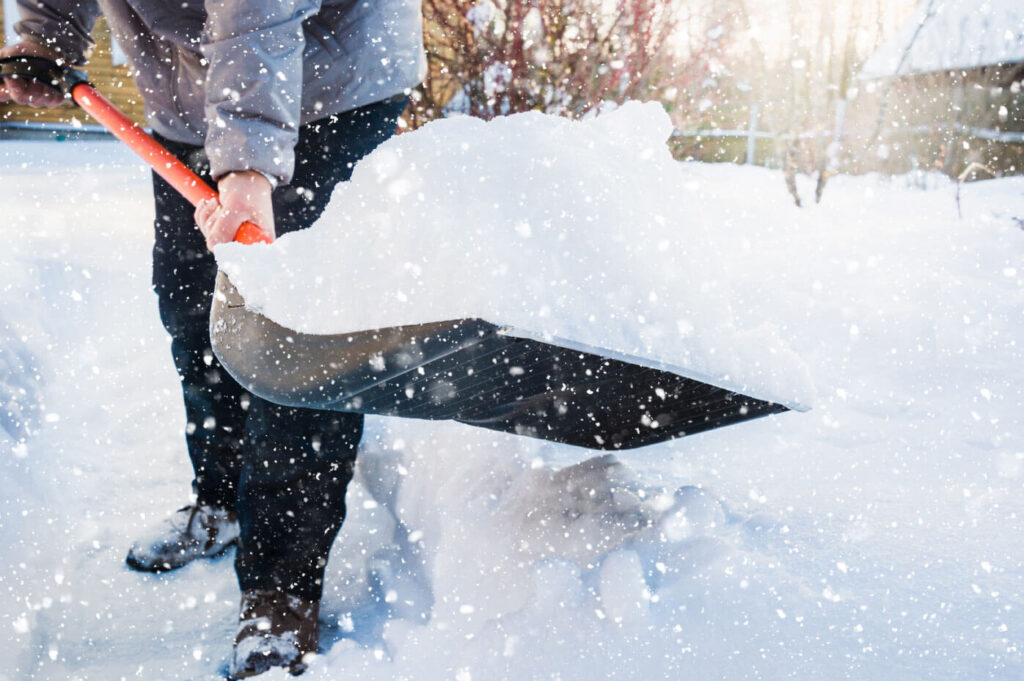
Back Pain From Shoveling Snow: How to Prevent It
Shoveling combines everything a spine handles poorly: cold stiff muscles, repetitive lifting from a bent position, twisting under load, and a heavy implement held out in front of you. Most shoveling injuries are not caused by one dramatic lift. They come from doing a mediocre movement two hundred times in a row.
In this post, we’ll be discussing why shoveling is so hard on backs, how to prepare, the technique that actually reduces load, and what to do if your back already hurts. Read on to learn more!
A Note for South Texas Readers
San Antonio sees measurable snow only rarely, but hard freezes happen, and when they do people clear driveways, move debris, and haul brush with no recent practice at any of it. Everything below applies equally to a winter storm cleanup, a weekend of yard work, or any cold-weather task that involves repeated lifting with a long-handled tool.
Four Parts of the Problem
Select a topic.
Choose a topic. Preparation and technique matter more than strength here.
Why shoveling hurts backs
Four risk factors stacked together
What makes it hard on the spine
- Cold tissue. Muscles are stiffer and less tolerant of sudden load
- Load held away from the body. A shovel extends the weight well in front of you, multiplying the force on the lower back
- Bending and twisting together. Rotating under load is the single worst combination for a disc
- Repetition. Hundreds of cycles with no rest
- Unstable footing. Slipping produces sudden unplanned loading
- Heavier material than expected. Wet snow can run far heavier per shovelful than dry
The usual pattern
People feel fine during, then stiffen up badly that evening or the next morning.
Key insight: the twisting throw at the end of each repetition causes more problems than the lift itself.
Before you start
Five minutes that change the outcome
Preparation
- Warm up. Five to ten minutes of walking and gentle movement before you pick up the shovel
- Dress in layers you can shed, since overheating leads to removing too much too fast
- Wear boots with real traction
- Choose a lighter shovel with a shaft length suited to your height
- Consider an ergonomic bent-shaft shovel, which reduces how far you bend
- Go out earlier and more often rather than waiting for accumulation
- Hydrate, since cold weather suppresses thirst while you still lose fluid
Who should not shovel
Anyone with heart disease, a recent back injury, or a surgeon’s lifting restriction should hand this task to someone else or use a snow blower.
Most skipped step: the warm up. Cold tissue under sudden load is how most of these injuries start.
Technique that helps
The changes that actually reduce load
How to move
- Push rather than lift whenever the layout allows. Pushing loads the spine far less
- Take smaller shovelfuls, which sounds slower and is not, because you stop less
- Bend at the hips and knees rather than rounding the lower back
- Keep the load close to your body
- Step to turn your whole body rather than twisting at the waist
- Walk the load to where it goes instead of throwing it over your shoulder
- Switch which hand leads periodically
- Rest every ten to fifteen minutes
The two biggest wins
Push instead of lift, and step instead of twist. Those two changes remove most of the risk.
Never do this: lift a full shovel and rotate to throw it behind you. That is the classic disc injury mechanism.
If your back already hurts
The first few days
What usually helps
- Stop the activity rather than finishing the job
- Keep moving gently. Prolonged bed rest slows recovery
- Ice in the first day or two, heat afterward if it feels better
- Over-the-counter anti-inflammatories if appropriate for you
- Resume normal activity gradually as tolerated
What to expect
A simple strain typically improves substantially within one to two weeks. Pain traveling down a leg, numbness, or weakness suggests nerve involvement rather than muscle and warrants evaluation.
Go to the nearest emergency department for: loss of bladder or bowel control, groin numbness, or weakness in both legs.
General guidance. If you have a known spine condition or a lifting restriction, follow your clinician’s instructions instead.
The Part That Is Not About Your Back
Shoveling is also a cardiac stress, and this deserves saying plainly. It combines heavy isometric exertion with cold exposure, which raises blood pressure and constricts blood vessels at the same time the heart is working harder. Emergency departments see a predictable rise in cardiac events after heavy snowfall.
Stop immediately and call 911 for: chest pain or pressure, pain radiating into the arm or jaw, shortness of breath out of proportion to the effort, lightheadedness, or nausea.
If you have heart disease, high blood pressure, or have been sedentary, discuss snow clearing with your physician before winter rather than during it.
What Actually Prevents These Injuries
The honest answer is year-round conditioning, not winter technique tips. A back that handles two hundred lifting cycles is one that lifts regularly the rest of the year. Hip and trunk strength, general conditioning, and the habit of hinging at the hips rather than rounding the back all transfer directly.
NIAMS notes that staying active supports recovery from most back pain, and the same conditioning that aids recovery also prevents the injury in the first place. Our posts on core strength and back health and protecting your spine during physical work cover the same mechanics in other settings.
When to Seek Care
Call 911 for: chest pain or pressure, pain radiating to the arm or jaw, severe shortness of breath, or fainting during exertion.
Go to the nearest emergency department for: new loss of bladder or bowel control, numbness in the groin or inner thighs, or sudden weakness in both legs.
Schedule an evaluation for: pain traveling below the knee, numbness or tingling in a leg or foot, weakness in a leg or foot, pain not improving after two weeks, or pain that followed a slip or fall. MedlinePlus advises contacting a provider for severe pain, pain that is not improving, or back pain that follows an injury.
How We Help
At Neurosurgery & Spine Consultants, the first question after a lifting injury is whether this is muscle or nerve, because the two follow different paths. A strain is managed with gentle activity and time. Pain traveling down a leg with numbness or weakness means a nerve is involved, and that gets imaging and a different plan. Our physical therapy team handles both the recovery and the conditioning that prevents a repeat, and our post on back spasms covers what to do in the first few days.
Frequently Asked Questions
Why does shoveling snow hurt my back so much?
It stacks several risk factors at once: cold stiff muscles, a load held far from your body on a long handle, bending and twisting together, and hundreds of repetitions. The twisting throw at the end of each repetition typically causes more trouble than the lift itself.
What is the safest way to shovel snow?
Push rather than lift whenever the layout allows, take smaller loads, bend at the hips and knees instead of rounding your back, keep the shovel close to your body, and step to turn rather than twisting at the waist. Rest every ten to fifteen minutes.
Should I warm up before shoveling?
Yes. Five to ten minutes of walking and gentle movement makes a measurable difference, because cold tissue is stiffer and considerably less tolerant of sudden loading. Skipping the warm up is among the most common contributing factors in shoveling-related back injuries.
How long should back pain after shoveling last?
A simple muscle strain usually improves substantially within one to two weeks with gentle activity rather than bed rest. Pain traveling below the knee, numbness, tingling, or weakness suggests nerve involvement rather than muscle and should be evaluated instead of waited out.
Who should avoid shoveling snow entirely?
Anyone with known heart disease, uncontrolled high blood pressure, a recent back injury, or lifting restrictions from a surgeon. Cold exposure combined with heavy exertion raises cardiac risk, so discuss it with your physician before winter rather than during a storm.
Is a snow blower better for your back?
Generally yes, because it removes the repeated lifting and twisting. It is not risk free, since starting one, maneuvering it over uneven ground, and clearing jams all involve exertion. Never clear a jam by hand while the machine is running.
Hurt Your Back Shoveling or Lifting?
If pain is traveling into a leg, or has not settled after a couple of weeks, it is worth finding out why. You’ll want to contact us using the form below or call our office at 210-255-8935. We’ll be sure to respond as soon as possible. We look forward to hearing from you soon!
DISCLAIMER: No content on this site, regardless of date, should ever be used as a substitute for direct medical advice from your doctor or other qualified clinician.