
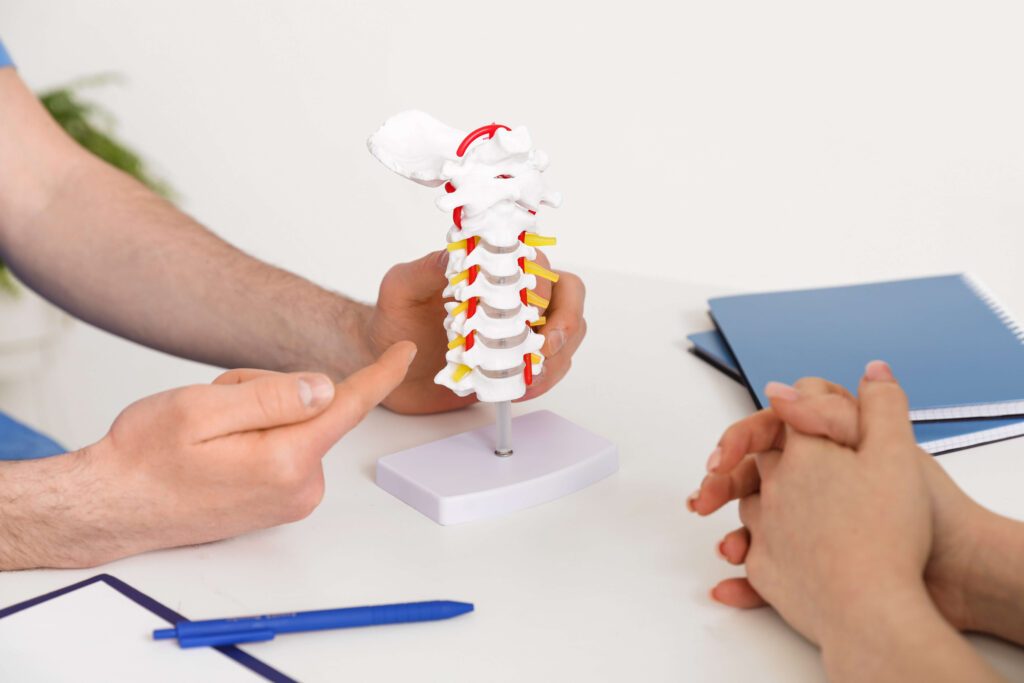
Spine surgery is generally recommended when symptoms such as severe pain, nerve compression, weakness, or spinal instability persist despite conservative treatment, or when there are urgent findings like progressive weakness or loss of bladder or bowel control. Most patients are not surgical candidates, and many improve with non-surgical care first. When surgery is considered, the choice of procedure depends on the diagnosis and the person.
Conditions Where Surgery May Be Considered
- Herniated disc with persistent nerve pain or weakness
- Spinal stenosis, where narrowing compresses nerves
- Spondylolisthesis or instability, when one vertebra slips over another
- Spinal fractures, including painful vertebral compression fractures
- Deformity, such as certain scoliosis curves
- Tumors or infection affecting the spine
Common Procedures
Procedures vary widely. Decompression surgeries relieve pressure on nerves. Transforaminal lumbar interbody fusion (TLIF) joins vertebrae to stabilize a segment of the lower spine. SI joint fusion stabilizes the sacroiliac joint when it is a confirmed source of pain. Kyphoplasty treats certain vertebral compression fractures by restoring support with bone cement. At NSC, kyphoplasty and SI joint procedures can be performed in the office. Many operations can be done with minimally invasive techniques, depending on the case.
How the Decision Is Made
Before recommending surgery, your surgeon reviews your symptoms, exam, imaging, and any nerve testing, and considers your goals, health, and how you have responded to other treatments such as physical therapy. Every surgery has risks and no result can be guaranteed, so you should leave the conversation understanding the benefits, risks, and alternatives. You are always welcome to ask questions or seek a second opinion.
What Recovery May Look Like
Recovery depends on the procedure. Some minimally invasive procedures and in-office treatments involve shorter recovery, while fusion surgeries typically need weeks to months of gradual healing. Your team will explain activity limits, wound care, and follow-up visits. Physical therapy often helps restore strength and movement, and following instructions closely supports healing. Results vary, so it is important to have realistic expectations and to discuss them openly with your surgeon.
Every patient's situation is different, so general information is only a starting point. Keeping notes on when symptoms began, what makes them better or worse, and any treatments you have tried can help your care team understand your situation faster. Bring your questions, because the best care is a partnership between you and your providers.
When to Talk to a Specialist
If back or neck pain is not improving, or you have nerve symptoms, a specialist can help you understand whether surgery is appropriate or whether other options come first. Neurosurgery & Spine Consultants evaluates, diagnoses, and treats spine conditions, and you can learn about surgical candidates on our site. Please request an appointment, and we will decide on next steps together.
This article is for general education and is not a substitute for a medical evaluation.
